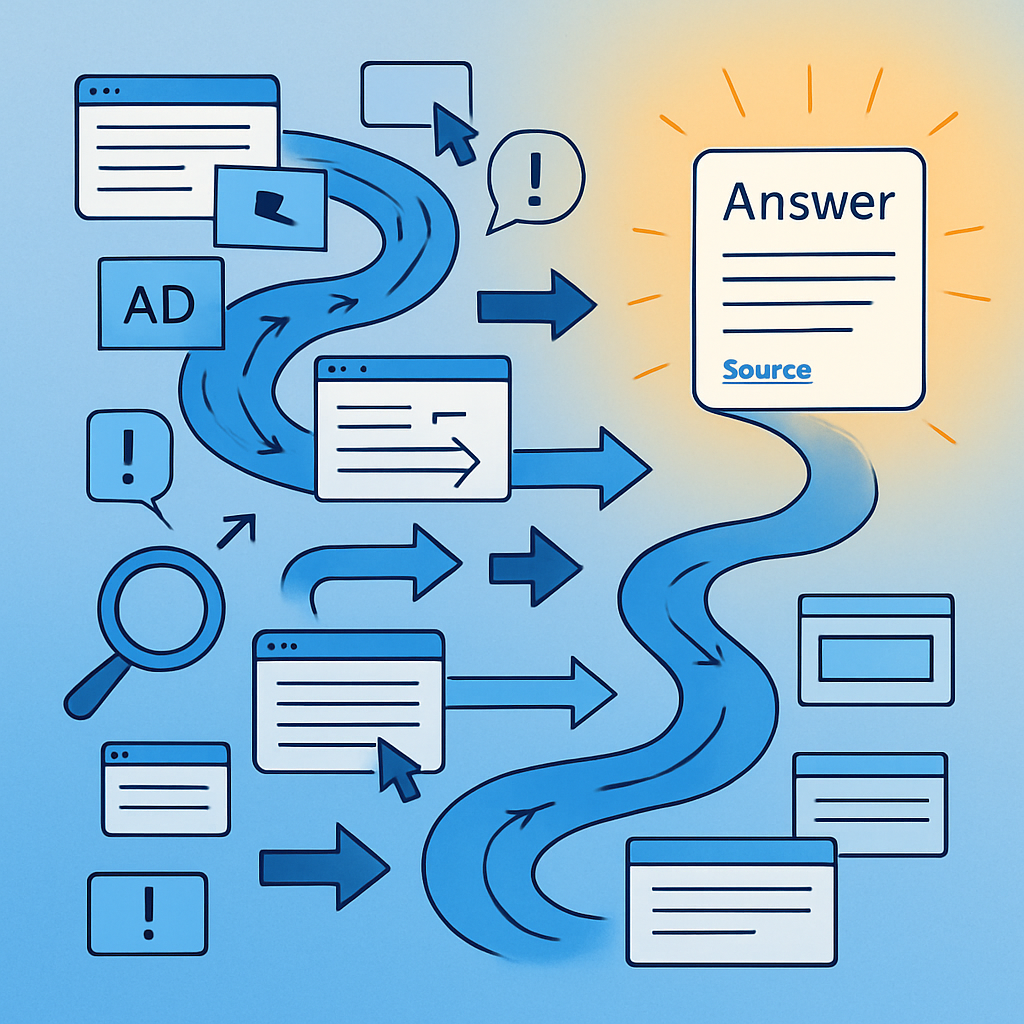
Many pages get ignored for a simple reason: they answer a different kind of question than the user is asking. The writing can be clear. The topic can be correct.…
Many teams treat content formats as interchangeable. A blog post, a PDF, and a book all feel like the same thing once they're published. Answer engines see them differently. Formats…
For a long time, authority felt like a popularity measure. Large brands ranked well. High-volume sites dominated results. Publishing often looked like the safest way to build visibility. Many teams…
When people talk about AI search, it often sounds like one system doing one job. In practice, AI answers usually come from two paths working together: what the model already…
In the early web, clever writing often helped. A smart headline could pull clicks. A playful opening could keep people reading. A bit of mystery could make a page feel…
A lot of SEO advice treats search engines and AI answer systems like they work the same way. They don't. They're built around different goals. Traditional search engines focus on…
When an answer appears, most content has already been filtered out. By the time a featured snippet shows up, a voice assistant responds, or an AI tool generates an answer,…
Search used to work like a library card catalog. You'd type in a few words, get a list of links, and pick which one looked promising. The sites at the…
Search is no longer about sifting through pages of links. Today, users expect instant, accurate answers—delivered directly, often with clear citations and context. This shift is transforming not just how people find information, but how brands, publishers, and the web itself must operate.
For a long time, visibility meant traffic. If a page ranked well and brought in clicks, it was doing its job. Teams tracked sessions, impressions, and rankings. The idea was…